One Pack, One Full Salad Garden
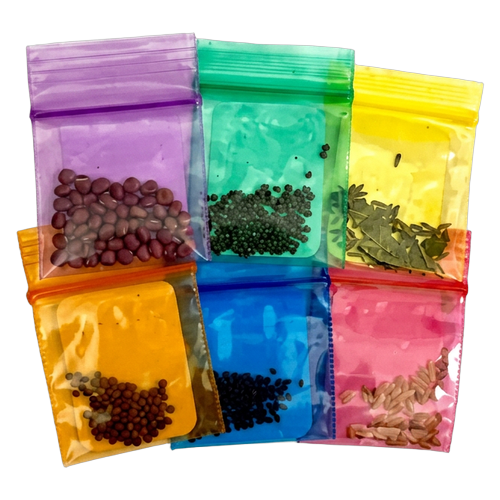
The Living Lab Seeds Fruit & Veggie Starter Pack gives you six heirloom vegetable varieties — radish, kale, lettuce, collard greens, Tokinashi turnip, and cherry tomato — with enough seed in each packet to plant well beyond a single season. Because they're heirloom, not hybrid, seed saved from a mature plant will grow true to type next season — a real seed-saving lesson, not just a one-time planting. Grow all six together and you don't just get a garden, you get a complete salad: greens, a root vegetable, and a fruiting vegetable, all from one starter pack.
Six Varieties, Six Very Different Timelines
What makes this pack more than "six vegetables in a bag" is the spread in how fast each one grows. Planted on the same day, they don't finish anywhere close to together — which makes the pack a built-in lesson in comparative plant growth, not just a planting activity:
-
Radish — the fastest of the six, ready in as little as 20–30 days. A near-instant win for younger students or a short unit.
-
Kale — ready in about 30–60 days, and one of the most frost-tolerant of the six.
-
Tokinashi turnip — a fast, mild-flavored Japanese salad turnip variety, ready in about 40–60 days, and just as good raw in a salad as it is cooked.
-
Lettuce — ready in roughly 45–60 days depending on whether you harvest baby leaves early or let it mature.
-
Cherry tomato — ready in about 55–80 days, and the only fruiting vegetable in the pack.
-
Collard greens — the slowest of the six at 60–80 days, a Southern staple green known for getting sweeter after a light frost.
That last point is worth teaching directly: a tomato is botanically a fruit, not a vegetable — it develops from a flower and contains seeds, same as an apple or a berry, even though we cook and eat it like a vegetable. Growing it side by side with five true vegetables is a simple, hands-on way to make that classification stick.
What's in the Bundle
- 1 packet heirloom radish seeds (~60 seeds)
- 1 packet heirloom kale seeds (~70 seeds)
- 1 packet heirloom lettuce seeds (~120 seeds)
- 1 packet heirloom collard greens seeds (~60 seeds)
- 1 packet heirloom Tokinashi turnip seeds (~80 seeds)
- 1 packet heirloom cherry tomato seeds (~60 seeds)
450+ heirloom seeds total — enough for multiple plantings, successive classes, or a full growing season, not just one round.
(Seeds only — soil, containers, and tools are not included. Pairs naturally with any FTF raised-bed kit, hydroponics kit, or existing classroom garden.)
Growing Basics
| Variety |
Approx. seed count |
Days to harvest |
Light needs |
Notes |
| Radish |
~60 seeds |
20–30 days |
Full sun |
Fastest of the six; great for short units |
| Kale |
~70 seeds |
30–60 days |
Full sun to part shade |
Frost-tolerant; sweeter after light frost |
| Tokinashi Turnip |
~80 seeds |
40–60 days |
Full sun |
Fast, mild Japanese salad turnip; good raw or cooked |
| Lettuce |
~120 seeds |
45–60 days |
Full sun to part shade |
Harvest baby leaves early or let heads mature |
| Cherry Tomato |
~60 seeds |
55–80 days |
Full sun |
The only fruit in the pack; needs warmth to finish |
| Collard Greens |
~60 seeds |
60–80 days |
Full sun |
Longest season of the six; also sweetens after frost |
(Days-to-harvest ranges above are general guidance)
A Ready-Made Comparison Activity
Because all six varieties are planted the same day but finish on wildly different schedules, this pack works well as a graphing or tracking exercise: chart germination dates, then chart harvest dates, and let students see growth-rate differences play out in real time rather than as a number on a seed packet. Radish gives an early payoff to keep momentum going; tomato is the long-term project that's still growing weeks after everything else is harvested.
Who It's For
-
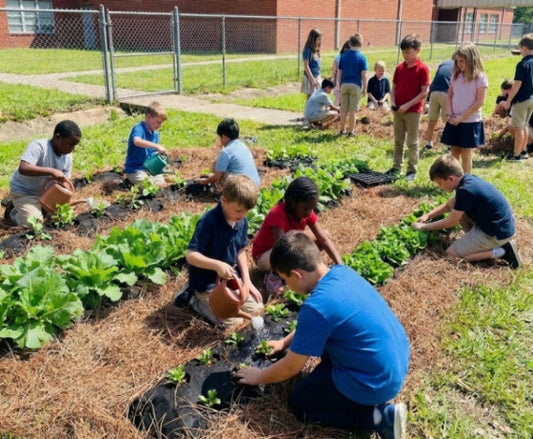
Classrooms and after-school programs running a vegetable garden unit or a "farm to salad bowl" project
-
Teachers who want fast wins (radish, lettuce) and a longer-term project (tomato) in the same pack
-
Garden clubs and STEM programs building out a full vegetable bed
-
Families and home gardeners who want a well-rounded starter set without buying six separate seed packets
FAQ
Q: What seeds are included in the Fruit & Veggie Starter Pack? A: Six heirloom seed packets: radish (~60 seeds), kale (~70 seeds), lettuce (~120 seeds), collard greens (~60 seeds), Tokinashi turnip (~80 seeds), and cherry tomato (~60 seeds) — over 450 seeds total.
Q: Are these seeds heirloom? A: Yes, all six varieties are heirloom seeds, meaning they're open-pollinated and will grow true to type if you save and replant seed from a mature plant.
Q: Which vegetable grows the fastest? A: Radish, typically ready in 20–30 days, making it the fastest of the six by a wide margin.
Q: Which one takes the longest? A: Collard greens, usually 60–80 days to harvest, with cherry tomato close behind at 55–80 days — both take more than twice as long as radish.
Q: Is a tomato really a fruit? A: Yes, botanically. A tomato develops from a flower and contains seeds, which is the scientific definition of a fruit, even though it's commonly cooked and eaten as a vegetable.
Q: Does this include soil, pots, or tools? A: No, this is a seeds-only pack. It pairs well with a raised-bed kit, hydroponics setup, or existing pots and garden space.
Q: What is Tokinashi turnip? A: A fast-growing, mild-flavored Japanese salad turnip variety, typically ready in 40–60 days, that can be eaten raw in salads or cooked.
Q: Can this whole pack be grown together as one garden? A: Yes. All six varieties are common companion vegetables and can be grown in the same bed or a few containers, though they'll finish at different times since their growing periods vary significantly.
Q: Is there enough seed here for more than one planting? A: Yes. With over 450 seeds across six packets, most classrooms and home gardens will have seed left over for a second planting or a following season.
Q: How much does the Fruit & Veggie Starter Pack cost? A: $11.99 for all six seed packets.